




Switches are an important part of electronic systems. It is one of the most frequently used human interaction with electronic devices methods. But switches are the mechanical components that are a vital part of any equipment.
Electrical switches
Electrical switches are as old as electricity. The function is always the same – it makes or breaks current in a circuit. In early 19th switches were used for DC circuits, while later for AC and then they serves for switching wide spectra signals starting from audio and ending with digital.
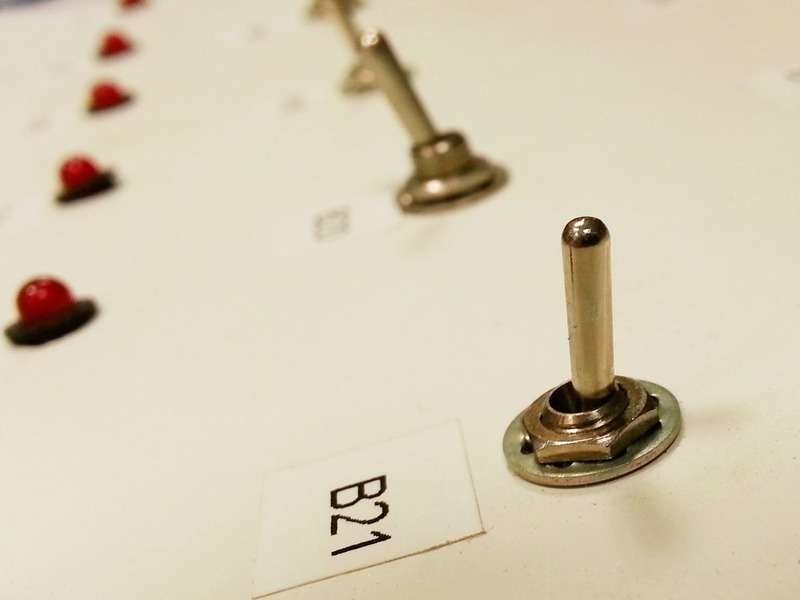
Well, switches have changed compared to those before 100 years, but the principle is the same old as the electric itself. When the switch connects the circuit path, it has a resistance of mOhm, and when the current path is broken, resistance is high MOhms and higher. This resistance and maximum voltage that can be applied to insulation is often a major important and vital feature that leads to switching stability.
Contact resistance
Switch resistance is determined by switch contacts – the moving metal parts which touch when the switch is ON. The amount of contact resistance depends on the area of contact, contact material, the amount of force that presses the contacts together, and how the force has been applied. For instance, when contacts are wiped together, there is much lower resistance than when contacts are pushed together. Large area contacts are used for high current circuits, while small contact area switches for low current – usually used in electronic devices. The real true contact area is smaller than the physical area of contacts because it is impossible to have precisely flat contacts(you can check this in any ignition circuits where contact areas are burned.).
Contact resistance increase during the time because of oxidation and contamination. The only way to deal with this is to wipe contacts. But the disadvantage of wiping action is that this action may abrade contacts who can remove contact platings like nickel-alloy or gold.
Electroplating allows constructing contacts of bulk material, which is mechanically suitable. Plating also reduces contact price comparing if used as a bulk material for the whole switch. This way, we can get contacts with wanted electrical and chemical properties. Choosing contact materials is never easy as those low resistance contacts are vulnerable to chemical attack by the atmosphere. Still, some of them may provide contact sticking and may weld. Another problem is burning and oxidation. The spark current may melt contact and combine with oxygen in the atmosphere. Oxidation is rather more problem than melting because oxides are non-conductors, and this causes to rise in resistance and degradation of a switch.
Common contact materials of switches
Let’s go through several contact materials used in switches:
- Silver – It has low resistance, but it corrodes. It may be used in High current and high-pressure switches;
- Palladium-Silver – Less contaminated but has higher resistance. Suitable for general use;
- Silver-Nickel – resistive to burning and sticking but has higher resistance. Suitable for general use;
- Tungsten – Hard metal and has a high melting point but oxidizes easily. Used for high power switching;
- Platinum – Stable metal and resists chemical attack can be used for high voltage and low current. Used for special purposes;
- Gold – Resistive to corrosion and can be easily plated in other metals but can be used for low current switches and is widely used in electronics.
So we can see that silver has the lowest resistivity of all metals, but silver is badly corroded by the atmosphere, so silver contacts have a short life. If there is a way to exclude atmosphere contamination, then silver contacts or silver coating are desirable in high current circuits. Usually, silver contacts are placed in a closed coating with inert gases.
On the other hand, Golden plating is a widespread solution because of its resistivity to corrosion. But golden contacts can only be used in relatively low current circuits, and moderate pressure can be applied because of metal softness. Of course, gold contacts aren’t immune to corrosion. For instance, sea-water may produce chlorine when current passes the water. Golden contacts can be corroded with chlorine. So at sea, golden switches are not the best choice unless circuits are isolated from seawater.
Of course, there are other metals used for contacts like molybdenum. They are still used for special purposes where special properties are needed, like high resistance to burning where contact arcing occurs.
Need some graphics!