




Electromechanical energy counters were popular for more than 50 years. Today, you can find them only in older houses or in low-budget appliances because today, electronic energy counters are taking their place. And there are many reasons to do so. For instance, measurement accuracy, flexibility, multi-rate support, memory, statistics, remote reading and control, automatic register, and so on. These features can be built into one small chip, which will serve with high reliability and low price.
Let’s see how energy (active power) consumption is measured. Active power which is required in the form of alternate current (AC) can be calculated as average power over one period:
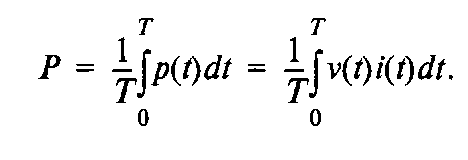
Normally power comes in sinusoidal form, then
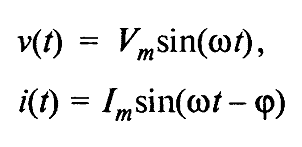
So we get
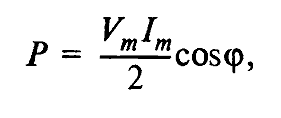
where cos(fi) power coefficient which depends on load properties.
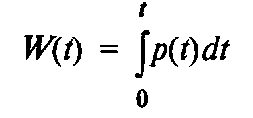
Power consumption over time t can be integrated as follows:
One of the first IC power measurement solutions was AD7750, which is constantly converting current and voltage to digital and calculated instant active power.

The device has two inputs. The differential voltage value between V1+ and V1- is proportional to the current value. It is usually read from a measurement transformer. Input voltage is amplified with a programmable gain amplifier and then goes to sigma-delta second-order modulator with 900kHz sampling frequency. Then the signal is passed through the HF filter and then delayed to compensate for the phase shift in the filter.
In the second input, V2+ and V2- differential voltage is proportional to load voltage. This voltage is amplified by 2 and modulated with the second sigma-delta modulator. Then instant current and voltage values are digitally multiplied to get instant active power. Then results are passed through the LF filter to get the currently active power. The current power value is converted to frequency and output to F1 and F2, one normal and another inverted. Frequency is proportional to average active power. Having this data, there are many ways to display and register energy. One of the ways is to use a stepper motor, which turns depending on frequency. This chip outputs 275ms wide signals in the frequency range from 0 to 1.8Hz. The chip also detects reverse energy flow. Then REVP changes its state. FOUT pin gives conversion with higher rates and is used for calibration purposes.
AD7750 gives high precision – about 98% in dynamic range 500:1 and 96% in rage 1000:1. Analog Devices produces more IC for energy measurements. AD7756 can be used for single-phase, AD7754 triple-phase. Data can be read through the SPI interface by a microcontroller or from internal ADC. Hobbyists may use these chips for home automation projects.