Category Archives: Technology

Nanoscale Lasers – The Gateway for Faster Computer and more Reliable Internet Access!

Laser technology is no longer a brand new thing, but it’s still has the potential to be expanded and modifying into a higher level technology!

In this case, the researchers from Arizona State University and Technical University of Eindhoven in the Netherlands have been worked out together to create a much smaller laser type – The nanoscale laser!

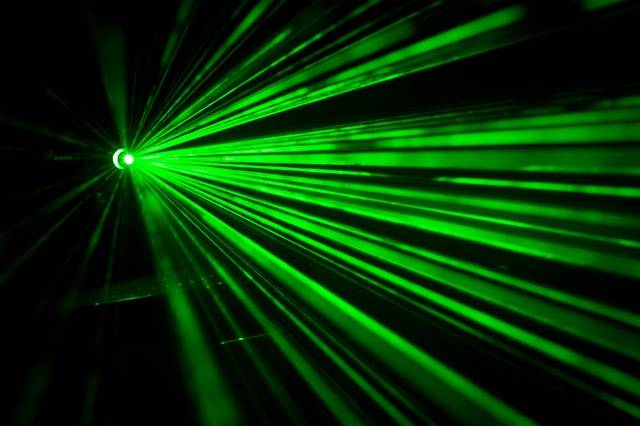
fire-the-laser

Cun-Zheng Ning, the professor in the School of Electrical, Computer and Energy Engineering in ASU’s mentioned that the nanoscale laser is way much powerful than the ordinary laser, which is significantly improve the performance of computers and speed up internet access!

Mr. Ning said the lasers are very common in nowadays’ world. The laser technology could be found in many electronic and electrical components. The smaller lasers are normally being used in technology that enables communications across continents.

The research team has been trying to make laser into the nanoscale, so that it can be used in the devices, which is compatible with smaller electronic components. The electronic devices can perform faster and effectively, if more lasers are used with these components! As a result, it speeds up the working of your computer and internet access up to several times. [sciencedaily]

Silicon with Afterburners – The Latest Technology that Will Become a Boon to Electronic Manufacturer

Silicon is one of the most important substances in the electronic, electrical and computer niches. Without the silicon, many electronic components can be hardly existed at all!

By the way, a group of scientists at Rice University and North Carolina State University has discovered a new method. They found out that it’s possible to attach molecules to semiconducting silicon, as it helps manufacturers reach beyond the current limits of Moore’s Law.

Silicon with Afterburners

James Tour, Rice’s Chao Professor of Chemistry and professor of mechanical engineering and materials science and of computer science described that the biggest challenge is to get past the limits of doping.

Doping is regarding as an essential process to create the silicon substrate. Normally, doping method is applied at the heart of all modern integrated circuits.

In addition, doping introduces impurities into pure crystalline silicon. It acts as a tuner and tuning microscopic circuits to a particular need.

When the silicon becomes extremely small into the nanoscale, you get structures that essentially have very little volume. Tour said the problem could be easily solved, when we’re attaching molecules to the surface of the silicon, rather than mixing them up!

Tour mentioned that this research is nearly in the final stage, and it would be available to be used in the market very soon…[sciencedaily]

The World’s Smallest Plasma Torch is ready for Your Service!

What will you think about, when someone mention about the Plasma torch? For your information, the plasma torch is having no relationship with the ordinary light torch, as we cannot use it to shed the light in the dark! Instead, a plasma torch is a high tech device, which generates a directed flow of plasma from its nozzle.

Chunqi Jiang, a talented professor at University of Southern California, have been developed the world’s smallest plasma torch for dentistry niche. According to Jiang, his main goal is to guarantee the customers won’t have to see the dentist for a follow-up visit!

Plasma torch

Jiang described that Plasma, which is also known as “Ionized Gas”, is one of the four basic states of matter (The other three are solid, liquid and gas). Did you know that plasma is the most common state of matter, not only on the Earth, but also in the Solar system, stars and the universe as well?

All stars create plasma, by super-heating atoms. On the Earth, human being are mostly use super-heated plasma to rip trash apart at an extremely high temperatures!

Now, thanks to Jiang invention, the plasma torch can be used to kill bacteria on teeth or wounds. Honestly, it’s a new breakthrough for plasma technology! [discovery]

The Latest and High Tech Optical Transistor!

For all the beloved home hobbyists, you’re very familiar with the transistor, as it’s one of the essential electronics components, which is commonly being used to amplify/switch electronic signals.

However, have you ever heard the Optical Computer Closer, which is an optical transistor made from single molecule? It sounds like an impossible thing to you, isn’t it?

Believe it or not, a research team from ETH Zurich have made a new breakthrough for electronics field, when they’re managed to develop the world’s first optical transistor from a single molecule!

Optical transistor

Nowadays, the internet connection and computer need to be faster and more powerful. However, it seems there’s an obstacle, when the conventional central processing units (CPUs) limit the performance of computers. Did you know that one square centimeter of CPU is capable to emit up to 125 watts of heat? Let’s think about it, what will happen, if you have ten square centimeters or even hundreds?

So, when the ETH Zurich research team discovered the optical transistor, it gives a brand new hope to the electronics and computer niches. They’re now in the stages, where they want to find out the ways to create the brand new computer, the Quantum Computer! [sciencedaily]

Printed Supercapacitor – The New Revolution of Printing Technology

Capacitor, or also known as “condenser” is a passive electronic component. It consists of a pair of conductors and mostly separates by a dielectric. If a voltage potential difference exists between the conductors, an electric field is detecting by dielectric. The field stores energy and produces a mechanical force between the plates.

A research team, which is led by George Gruner at the University of California, Los Angeles, has discovered a printed supercapacitor for the very first time! By the way, the supercapacitors claimed to store more than thousands of times as much energy as standard ones.

According to Gruner, for developing the printed supercapacitor, they need to spray carbon nanotubes onto two plastic films, which are acting as both the device’s electrodes and charge collectors. Then, the team sandwiched a gel electrolyte (It made by mixing a water-soluble synthetic polymer with phosphoric acid and water) between the two films!

Gruner described that the supercapacitor has a power density of 70 kilowatts per kilogram. This feature allows rapid charging and discharging become easily! The energy density is 9 watt hours per kilogram, which means one kilogram is able to hold up to 32 kilojoules. Honestly, both figures are much better than standard commercial devices.

Meanwhile, the team is also researching an “experimental batteries”. Gruner said these types of new batteries have the energy storage of normal batteries, but it can charge and release energy 100 times than lithium ion batteries did!

It looks like the lithium ion batteries would be eliminated very soon, after the new battery type being introduced into the market. [newscientist]

The Conventional Raindrops Spectrometer Will Take Record of Every Raindrop!

We always have the common thought that larger raindrops fall faster than smaller raindrops, as they have a greater terminal speed. Talking about the terminal speed, it’s the speed when the downward force of gravity is same as the upward air resistance.

In order to proof it’s wrong, two physicists, professors Alexander Kostinski and Raymond Shaw from Michigan Technological University, co-authored with Guillermo Montero-Martinez and Fernando Garcia-Garcia at the Universidad Nacional Autonoma de Mexico, have already discovered that the common sense about the raindrops are wrong!

raindrops-discovery

The fantastic four have performed the research, by gathering rainfalls data at the Mexico City campus of the National University of Mexico. During the three years research, they’ve gathered more than 64,000 raindrops using optical array spectrometer probes and a particle analysis.

After long and detailed experiments, they’ve made the conclusion that some smaller raindrops can fall faster than bigger ones. To be honest, these small raindrops have the ability to fall faster than their terminal speed. This means, they have the momentum to fall incredibly faster than drops that size and weight are supposed to be able to fall.

“We need to first understand the rain formation processes and be able to calculate the amount of rain, before we want to forecast weather or rain accurately,” said Mr. Shaw.

It seems that the weathermen have always been overestimating the amount of raindrops in the weather forecast. [sciencedaily]

Inexpensive Plastic – The Alternative Material to be used in Aircraft and Computer Electronics!

You thought that the inexpensive plastic that being used in manufacturing CDs and DVDs has its limitation, then you’re totally wrong!

According to Shay Curran, the experienced professor of physics from University of Houston and his talented research team have demonstrated ultra high electrical conductive properties in plastics. It given named as “Polycarbonates”, they done it by mixing them with just the right amount and type of carbon nanotubes into it!

inexpensive-plastic

Curran said that he has began this research a decade ago, when his at Trinity College, Dublin. In that moment, he started to look at high-conductive plastic in a slightly different manner. Curran discovered that by simply combining nanotubes with polycarbonates, they’re able to create nanocomposites with ultra-high conductive properties!

Furthermore, Curran mentioned that by making this very inexpensive plastic becoming highly conductive, can bring many benefits to many industries, such as from military aircraft to personal computer. By using the modified inexpensive plastics in the computer niche, it can help to overcome the computer failure and increase the lifespan of computing devices.

Curran and his team are now trying their best to develop a much stronger and higher conductive inexpensive plastic. He hoped that they’re able to finish the experiment as soon as possible! [sciencedaily]

Today's Biggest NASA Challenges

NASA with its several efforts in aerospace achievements has been constantly targeting several challenges before it and there are seven main and big challenges before them currently. There are several technical constraints which are acting as obstacles for execution of several successful projects. Let us see them one by one. Once such is the lunar Regolith excavation. It was held during the second and third of august in the campus of polytechnic state university in CA in San Luis Obispo.

biggest-nasa-challenges

Let us see now what the challenge was exactly. The challenge was connected with the lifting of the lunar soil which is otherwise known to be lunar Regolith. Building an excavator which would help in the roving of and that could excavate as well as navigate and also help in the transferring of hundred and fifty kilograms of the simulated lunar Regolith in a bin that would be used as a collector within a time span of just thirty minutes. The need is that moving the lunar soil from one place to another will be very important in case of any construction on the moon. Even the processing of the resources would be requiring the transport of the Regolith. This challenge was held for the need that NASA is searching for a very inexpensive method that would cost less and would not consume much power or heavy machines. During the first challenge cash prize was not awarded to the three teams that were leading in the challenge. But this challenge is being managed for the NASA by the California space education and workforce Institute. Continue reading

Personal Flying Machines

personal-flying-machines

The personal flying machines are gaining more popularity with the increasing need of luxury of man and the rising creativity of the inventors. The day since the civil aviation began; there has been no looking back. Creative ideas have been constantly pouring in the development of the personal flying machines. Let us first see car-planes concept. The ever best known car-plane combination was actually invented by Mr. Moulton Taylor in the year of 1956. His creation had a tail, a wing as well as a propeller assembly. This propeller assembly had the ability of being attached to a very specially made car in a time span of just three minutes. He named it to be aerocar and to the astonishment of the spectators it flew very well. It was not that particularly high or fast, nor did it fly too far, yet it flew, that was a big fact indeed. It was for several decades that Moulton Taylor tried making his cute model of aerocar a big success in the commercial market but he failed in his attempts. The problem was with the manufacturers and the consumers. The danger or risk of producing it was a big concern for the manufacturers and the cost was a very big concern and worry for the consumers. The need for the pilot’s license was again a cause for their worry. Though the idea was novel, there were not many takers in the market. It is gladdening to note that Ed Sweeney, who is one among Taylor’s students, is on his efforts in rekindling the interest in his master’s dream -aerocar. The new design as proposed by Ed Sweeney is very slim and is based on the design of the sports car- Lotus Elise. Continue reading

Machine vision faster than human eye

Machine vision is more compact when compared with the other equipments. These equipments are greatly utilized in the development of more organized manufacturing operations carried out at the shop floor without any sort of confusion. Machine vision system is combination of imaging and controlling hardware that can influence the functionality of the more complicated equipments utilized in the manufacturing like robot-arms. The robot arms are to be calibrated with respect to the positional deviation allowed in a particular workstation. Hence precise monitoring of the working of such equipments is necessary.

machine-vision

Inspection process greatly relies on the utilization of the machine vision system to mobilize the thoughts of obtaining better results in the overall production process. Inspection is considered to the life of the shop floor and can greatly decide the outcome of the operation in many ways. Inspecting quite tiny and but active components like IC chips are carried out by the machine vision systems. They are supplied with several imaging equipments like camera to focus the change in the position of the component that is to be measured. This kind of setup is employed in the monitoring of the assembly lines carrying the supply of the raw material or finished goods traveling at constant speed towards the successive workstations. Continue reading

New on WinAVR Tutorial New on WinARM Tutorial