Archive for the 'Electronics Tutorial' Category

Switching step-up and step-down regulators
Tuesday, April 3rd, 2007

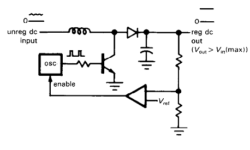
All regular voltage regulators (like 7805) have several disadvantages like output voltage is always lower than input and some power is dissipated in control element. Dissipated power is approximately equal to I(Vin-Vout).
There is another way to generate regulated voltage. Method is different from previous. In switching regulator a transistor operates as a saturated switch which [...]

Dual polarity power supply source

Tuesday, April 3rd, 2007

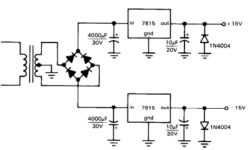
Most of op-amp circuits run from symmetrical bipolar supply source lets say ±15V. The simplest way to generate symmetrical split supplies is to use a pair of 3 terminal voltage regulators. For instance lets take two voltage regulators: 7815 and 7915.

 
If you need an adjustable variant of dual polarity regulated voltage source you can [...]

Electrical switches principles and switching problems

Thursday, March 22nd, 2007

Switches are important part in electronic systems. It is one of most frequently used human interaction with electronic devices methods. But switches are mechanical component that are vital part of any equipment.
Electrical switches
Electrical switches are as old as electricity. The function is always the same – it makes or breaks current in a circuit. In [...]

Overview of noises in electronic systems

Wednesday, March 21st, 2007

There are several sources of noises in electronic systems. Noises are unwanted signal polluting random or not signals that reduces overall signal quality.
Thermal Johnson/Nyquist noise
This noise is actually discovered by two scientists Johnson who did the experiments and Nyquist who developed the formula. Thermal noise present at all frequencies (has a constant power density at [...]

Long range directional microphones-myth and reality

Wednesday, March 14th, 2007

There are a lot of myths about directed long range microphones. You can here like they can reach distances of 100, 200 and more meters, other say that this is a myth and these numbers are commercial purposes. Lets try mathematically find a proof and see real situation.
Introduction to long range microphones
When talking about directed [...]

1-Wire protocol simple and easy

Wednesday, February 28th, 2007

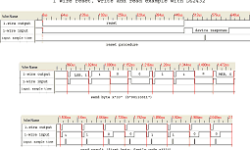
1-Wire communication protocol was developed by Dallas Semiconductor owned by Maxim. This protocol allows communication of multiple chips to one host with minimal pin count. The protocol is called 1-Wire because it uses 1 wire to transfer data. 1-Wire architecture uses pull up resistor to pull voltage of data line at master side.
1-Wire protocol uses [...]

Avoid noises in mixed signal design

Friday, February 9th, 2007

Today most of all embedded systems consist of two part circuitry – digital and analog. Digital part is usually controller, its timing circuit and other input output devices. Frequently there is an analog part on same board like ADC, OP amplifiers, sensors and other analog circuitry. Such designs are called mixed-signal designs. Where digital and [...]

Calculating of electrical heating elements

Monday, February 5th, 2007

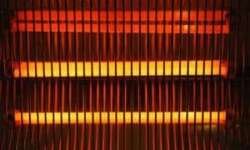
Electrical heating elements are often used for teapots, irons, electric ovens, soldering irons etc. When projecting designs with electric heating elements you need to do some calculations that may seem difficult at first glance. But when looking more deeply this becomes simple task.
We know that electric heating is a result of current flow in wire [...]

Calculating wire diameter for maximum current

Monday, February 5th, 2007

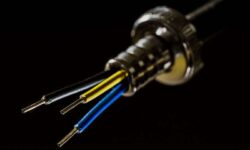
When selecting wire diameter we usually lok for cross reference tables where you can find recommended wire diameter for maximum current drive. But sometimes may be more useful to calculate by formula than look in to the tables. This way you can have more accurate results. There is nothing new just simple physics.
Wire resistance (Ω)is [...]

Electric circuits analogy to water pipes

Monday, January 22nd, 2007

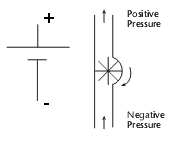
Sometimes calculating parameters and behaviour of some objects may be much easier when using analogy to objects with well developed theory and calculation methodology. In earlier article we analysed power dissipation of electronic devices using Ohms law where Voltage=temperature, Current=Dissipation and Resistance=Thermal resistance. This time lets look how can electronic devices transformed in water [...]