Archive for the 'Electronics Tutorial' Category

Testing pulse transformer with an oscilloscope

Tuesday, October 2nd, 2007

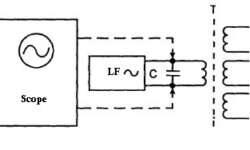
Pulse transformers are little different from regular AC transformers. In AC transformers magnetic flux alternates between negative and positive values in core while in pulse transformers magnetic flux is unipolar. Pulse transformers are used in TV, computer power supplies. If you need to test pulse transformer it may be almost impossible to do this with [...]

Measurement of electrical energy consumption today

Wednesday, September 12th, 2007

Electromechanical energy counters were popular for more than 50 years, but today you can find them only in older houses or in low budget appliances because today electronic energy counters taking their place. And there are meny reasons to do so. For instance measurement accuracy, flexibility, multi-rate support, memory, statistics, remote reading and control, [...]

Oscilloscope probes for accurate signal measurements

Wednesday, August 15th, 2007

Oscilloscope Probes
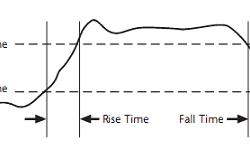
Measuring signals with oscilloscopes may be challenging task especially high frequency ones. Without proper oscilloscope probes correct measurement of high speed time domain signals wouldn’t be possible. For high speed measurement you should consider signal parameters like amplitude, source impedance, rise time and bandwidth.

 
There is a wide variety of probes available – passive, active, [...]

Reliable soldering with fluxes

Wednesday, August 1st, 2007

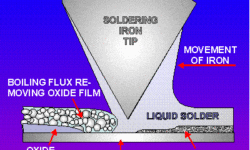
Reliable soldering can be achieved by soldering clean surfaces. Usually surfaces are cleaned with abrasives and solvents, but after surface is cleaned surface immediately oxides especially when heated. During oxidation surface is covered by thin oxide film which prevents solder from contacting to metal. This is why flux is used in soldering process. In order [...]

What is worst-case timing analysis

Monday, July 9th, 2007

Probably many of you PC hardware people have faced similar problems when assembling computer from different parts and it seemed to work properly. But under some circumstances system just crashes without any known reason. Even in my practice I had a sound-card that that works well, but time at the time it just crashes and [...]

Electronic design and development process

Monday, July 9th, 2007

There are so many ways of designing and developing of electronic devices, that it is hard to think which would fit your needs and desires. But there are common steps that probably fit in most cases that allow to implement the electronic system from top to bottom:
1) Defining the requirements of electronic system;
2) Collecting information [...]

Chemical effects of electricity

Friday, June 29th, 2007

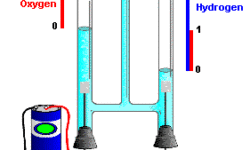
Electronics depend on chemistry more than you can imagine. In order to generate electricity there are many methods used, one of them is chemical. Remember batteries, where electricity is generated because of chemical reactions inside cell. Also in conductors like liquids and gases electricity is carried not by electrons as it is in solid constructions(copper, [...]

How to solder SMD at home even better-Part two

Wednesday, May 23rd, 2007

This is continue of part one. Following advises are for how to solder SMD parts with improved technology.
Oven isolation
As isolation material there can glass insulation be used. In this case glass insulation was packed in aluminum foil:

Inspected improvement in heating speed:

0.95% without isolation;

1.50% with isolation only inside oven;

1.72% full isolation.

How to solder SMD at home-Part one

Wednesday, May 23rd, 2007

Soldering SMD parts isn’t hard task and there are many methods of doing this. Lets go through several SMD soldering methods and examples.
Method 1
For this you will need:

Good eyes or magnifying glass. Better one and another;

Soldering iron with small tip ~10W;

solder wire with diameter about 0.6mm

Steps to follow:

cut solder wire in pieces in length of [...]

How PCB files are transfered to circuit boards

Monday, May 21st, 2007

When you are done with “clean” period of task – designing, drawing a circuit and tracing a PCB, you need to transfer a design to a real board. Here starts what I call a “messy” part of design. When designing at home there are several options - to use prototyping boards or make PCB [...]