Category Archives: Biomedical Engineering

Artificial Cornea Implants – donors of the future

The cornea is the clear protective layer covering the eye. Injuries and diseases affecting the cornea might lead to adverse eye problems like blurred visions. The cornea is responsible for filtering out ultraviolet rays that comes from the sun. However, with the advancement in medical technologies and the constant efforts of scientists through research, corneal diseases can be treated. The artificial corneal implants are the most recent of the treatments.

Artificial corneal implants proved to be beneficial because: it caters for the huge number of people who are waiting for corneal transplants and operations for instance Europe has a waiting list of over 40000 people and a worldwide list of 10 million. They are also biocompatible ensuring that there are no complications when in contact with the eye surface. In cases where traditional corneal transplants (also referred as corneal grafts) have failed to work, artificial cornea can be used. The risk of getting diseases from donors is also reduced. It prevents astigmatism and enhances rapid visual recovery.  Additionally, they are useful to patients who have not qualified to get living cornea donors. Continue reading

Brain Scan And Mind Reading – Not So Far

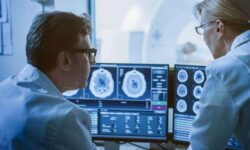
Brain scan and mind reading of the part of the brain responsible for memory have been used to detect a person’s location in the virtual environment. This enables the location of individuals as they navigate through the virtual rooms. These are used to discern what someone was doing, where they are or were and where they are planning to go. This shows that detailed mind reading will be possible with the advancing technology and research.

The hippocampus underpins the ability of a person’s mind to navigate, form, recollect memories and imagine future experiences. The mind reading and scanning is done by using multivariate pattern classification and high resolution functional MRI to decode activities across the population of neurons in the human medial temporal lobe while the participants navigate in a virtual reality environment. The position of an individual can be predicted accurately even when the visual input and task are held constant. Reading precise locations or other types of memory is difficult because fMRI (functional magnetic resonance imaging) resolves the activity of thousands of neurons at a time. Continue reading

Human And Machines Got Even Closer

In this era when technology continues to get advanced and better, it may pleasantly surprise many to note that machines are getting closer to humans and they are performing duties that no one hitherto would be possible. In other words, machines and gadgets are being invented that can imitate the human functioning, for example in the human brain, eyes and so forth.

But perhaps one of the latest inventions, that is a clear manifestation of humans getting even closer to humans, is a machine that has been made and which can imitate the human voice. The machine was invented as part of a completion, for the Artificial Conversational Entities, known as the ACE. Several machines that could imitate the human voice were entered for the competition and the winner was really awesome. During the competition, judges selected some of the five best machines and competed for five minutes, to get the best. This comprised if a five minute kind of interrogation, where there were unrestricted conversations with the machines, which tried to pass of as human beings. So real did these machines sound, that one would not tell whether one was a machine, or a human being. Continue reading

Dare to Have a Surgical Operation with Robot Surgeon?

Every person has his/her own fear. Some are afraid of height, water, insects and much more. We’re normally called this extreme fear as “Phobia”.

Believe it or not, some people seem to be normal, based on their appearance, but they’re fearing of getting surgery! Although it is not too much of such cases, but it does appears amongst us…

Well, you know what? A brilliant research team from Duke University has discovered the new approach, where they’ve found the way to insert the needle to a silver of steel shrapnel, without even human help!

Robot surgeon

According to Steve Smith, the doctor at Duke University said that the technology would help to reduce the cost and time, especially when you’re undergoing a biopsy or the surgical operations.

Smith mentioned, with the invention of the new technology, the users might have a ten-dollar biopsy done inside a supermarket, fast and no hassle at all!

Smith’s next step is to modify the robot surgeons into an independent device, which is could be used for other medical procedures, besides of finding tiny shrapnel!

However, Smith thought that it would take about ten years, if we want to see a fully automated robotic surgeon, which can act as a real human surgeon in the surgery room! [discovery]

USB Ultrasound Imaging Became Possible with Smartphone!

In the past, it’s impossible to combine the medical and technology fields together. However, thanks to the advent technology, most of the impossible mission becoming possible, especially in this bizarre 21st century!

The concept, “Cell Phone as a Platform for Healthcare” had been worked out since few decades ago. However, due to the lack of technology, it has been postponed for a very long time.

Today, a group of talented computer engineers from the Washington University in St. Louis are invented the minimalist approach to medical care and computing. They’d successfully combined the USB-based ultrasound probe technology with a smartphone, which is enabling a compact, mobile computational platform and a medical imaging device that is only the size of a palm!

The fantastic duo, William D. Richard, PhD. WUSTL associate professor of computer science and engineering and David Zar, Richard’s colleague have made commercial USB ultrasound probes that compatible with Microsoft Windows mobile-based smartphones.

For enabling the commercial USB ultrasound probes work with smartphones, the duo had to figure out the way to optimize every aspect of probe design and operation. They need to overcome those consequences that might happen, from power consumption and data transfer rate to image formation algorithms.

The image of Zar's carotic Artery appears on the smartphone

With the new USB ultrasound probes, it’s possible to build smartphone compatible USB ultrasound probes, especially for imaging/scanning the kidney, liver, bladder, eyes, prostate, uterine, vascular, veins and arteries! Continue reading

Blue Laser – The New Alternative Treatment for Autism Care

Life as a human being is full with many unpredictable events. We’re always have the risk of getting numerous types of diseases at anytime. Although the health and medical’s technology have been growing in leaps and boundaries, but there are many diseases remain uncured until today…

A new study has been shown that the blue laser has the power to cure the autism. A research group from MIT had carried out an experiment, where they shined the blue laser onto a live mouse brain directly. They discovered that the gamma waves are triggered in the mouse’s brain, where is the main brain wave that can be used to cure the autism.

blue-laser

The research group called the specific neurons that trigger gamma waves as “Fast-spiking interneurons”. Although scientists have known about gamma waves for over decades, but they’re lacked of technology to proof their theory.

They also mentioned that people with autism is mainly caused by the inadequate of gamma waves in their brain. One of the best solutions to overcome this problem is to trigger gamma waves in people with these psychiatric conditions as soon as possible!

More researches have to be done, before the blue laser could be used to cure the autism in the future. [discovery]

New Medical Robots Can Be as Small as Bacteria!

If you’re being told by someone in 20 years ago that you can create a robot which has a size as small as bacteria, the people might be said some words right in front your face, “You must be a psycho, as it’s impossible!”

Well, guess what! The brilliant ETH Zurich researchers have put on their own efforts. In the end, they’re able to create world’s first medical micro-robots has a size as small as bacteria.

artificial-bacterial-flagella

Check out the above figure, you might find that the robot is somewhat like a form of Flagella sp. Yep, it isn’t April’s Fool and you didn’t get it wrong here. This is the latest medical micro-robots, which has an average length of 5 – 15 µm long. They’re in spiral shape, tiny head and can easily swim at a speed of up to one body length per second!

Honestly, you cannot even see the micro-robots at all, unless you’re observing them under a microscope. The researchers also have given a name for these medical micro-robots and they’re called “Artificial Bacterial Flagella (ABF)”.

Bradley Nelson, the professor at the Institute of Robotic and Intelligent Systems at ETH Zurich said that the ABFs could be a very useful technology to help cure various types of diseases in near future.

Top 5 Magnificent Implants!!

In the present era, medical implants have advanced at an amazing pace. Many new technologies have been used in this field and operations such as radioactive seed implant, erections being created using hydraulics, plugging of a heart into a wall have been successfully performed.

Here are the top 5 exquisite implants being picked.

5. Radioactive Seed Implantation:

These implants are called brachytherapy. They are used to cure early stage cancer. This is performed by implanting small sized radioactive seeds into the prostate using a needle. These seeds emit radioactive radiations which are similar to the external radiations. These emissions attack the tumor. The radiation travels for a short distance and does not affect the region surrounding the prostate unlike radiotherapy.

radioactive_seed_implantation

4. Bionic Eye:

Continue reading

Implantable telescope

Consider all living things human being is a strange creation in this world because he sense and analyze the problem. For human being many sense organs are there like eye, ear, tongue, nose and the skin. In these five parts eye is very important without eye very difficult to live in this universe. Eye is the one of the most important organs in the body to provide vision to the human being. Some time eye lose its sensitivity by seeing the unwanted lights, radiation, continuous watching of television these all factors severely affects the eye. Rather than these factors, due to age eye lose its sensitivity. Whenever eye loses its sensitivity to identify something, suddenly consult any nearest doctor otherwise it leads to a big problem. If eye problem is happen due to the over age then the correct treatment for this problem is implantable telescope.

Why this implantable telescope is needed:

Some of the human being having this problem, due to over age light not able to penetrate and touch the retinal surface so due to this eye does not provide a clear vision to the people. The age macular degeneration is affected due to this most of the people lost their vision. So this implantable telescope is designed for providing the clear vision with good quality for the people who are affected by macular degeneration. The macula is not functioning well this is the only reason we go for this device.

implantable_telescope

Macula:

First of all what is macula it is a frequently asked question by the patients it is nothing but the area, which is lying in the center of the retina. This region or area is only responsible for the whole vision of human being. If this area is affected or not able to function well then there is a severe cause to the people. Continue reading

Are we bionic?

Bionic refers to application of biological ways and systems seen in nature to design and study the engineering systems. Bionic human would refer to human whose worn out parts can be repaired and refitted into the body. We cannot say that whole of a human body is replaceable but most of the parts can find replacements.

There are replacements for human bones, teeth, vertebral discs. All these can be designed as per  persons size and age. The tailored parts can be drawn in few hours in a 3D printer to fit into the damaged parts. A device can even print a bone using a porous polymer that looks very real. The artificial bones may not be perfect and same as the natural bones.  To give strength  we can add titanium powder with a laser. This would creates pores on the bones and the pores would be of different size and depth making it look more natural and these pores give strength and stiffness to the artifical bones.

bionic_legs

There are ways to even improve implants enabling tissues and bones to regenerate. There are lab results showing cartilage growth through artificial ways in labs, By such a process even damages such as on knee area can be fixed. This process can be extended to ligaments which are the connecting tissues between bone and the non-bones parts of the human body. The latest advancement in this filed is the stem cell research, Through this field any type of tissue can be grown without any prior organ being present. There are already results available to prove that complete organs can be regenerated. Artificially grown bladders are already used by many patients around the world. Continue reading

New on WinAVR Tutorial New on WinARM Tutorial