The Multipurpose Controllable Power Outlet

For all the home hobbyists, you knew that dealing with microcontrollers is a fun thing. Once you have been hooked with it, there was no turning back. Do you know that a microcontroller’s GPIO (General-purpose input/output) pins cannot handle higher power requirements? An LED was easy enough, but how about the large power items such as light bulbs, toaster ovens or blenders that required more circuitry? In this case, a relay is wanted in this situation. However, building a 5V controllable power outlet can be handy for many applications; thus a relay is a perfect choice for this project! For your information, a relay is a large mechanical switch, where the switch is toggled on or off by energizing a coil constantly. By applying the relay in the project, it will ensure your safety. Let’s take an example. If you have 120VAC running through the paddles, you don’t have to worry that 120VAC will sneak back into and vaporise your microcontroller connected to the coil, as the paddles are capable of carrying substantial currents! Furthermore, you can use the relay to control a DC motor or an AC lamp if you want to.

Continue reading

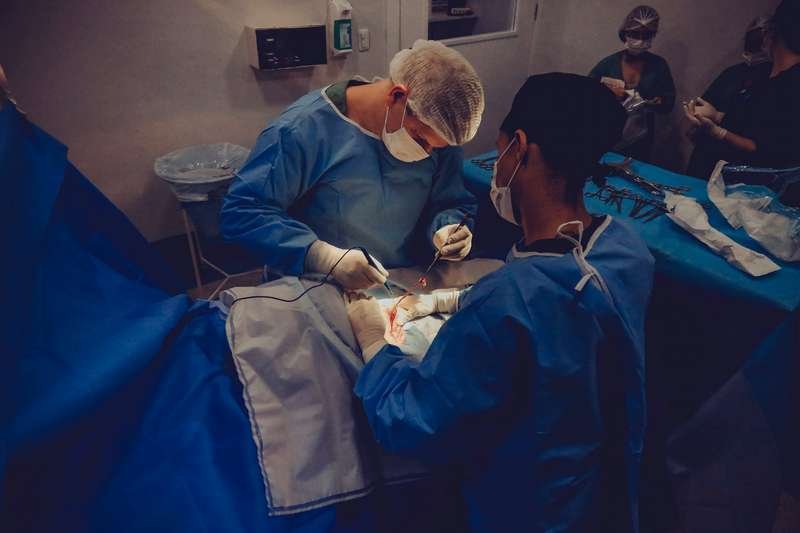
Surgical robots-for better surgery

Surgeons in Australia are excited over new surgical robots they are with to work surgical operations on patients. These new robots tolerate surgeons to work operations using enhanced precision to reduce postoperative complications and actually require fewer poles during the surgical method. Here’s how it works: using the surgical robot’s help, surgeons’ diffident behavior two automatic arms inserted into the tolerant through small incisions. A high-resolution 3-D telescope accompanies the mechanical component so that the doctor can see what’s gratis on. Seated at a console, the doctor can then work composite travels such as making incisions, manipulating tissues, or even suturing tissues.

Continue reading

The Stirling cycle – technology beyond expectation

The key code of a Stirling engine is that a downright calculate of gas is sealed within the machine. The Stirling cycle involves a cycle of check that mutation the hassle of the gas within the engine, causing it to do work. There are numerous properties of gasses that are risky to the venture of Stirling engines: If you have a rigid amount of gas in a rigid level of celestial and hoist the gas’s temperature, the hassle will improve. If you have a rigid amount of gas and compress it (decrease the level of its space), the gas temperature will improve. Let’s go through the piece part of the Stirling chain while looking at a simplified Stirling engine. One cylinder is heated by an outdoor heat bound (such as a fire), and the other is cooled by an outdoor cooling bound. The two cylinders’ gas chambers are allied, and the pistons are joined to apiece other mechanically by a linkage that determines how they will move about one another. You can add heat to the gas inside the heated cylinder (left), making it a bit hard. It compels the piston to move a little down. This is the part…

Continue reading

Happy 40th Anniversary to the First Computer Mouse!

A mouse (Not the pesky rodent!) is a pointing device, where it functions by detecting two-dimensional motion relative to its supporting surface. To be more precise, a mouse consists of an object that holds under one of the user’s hands, with one or more buttons. As you can see, the contemporary computer mouse has a wheel that allows the user to perform various system-dependent operations. Do you know that inventor Douglas Engelbart was creating the first computer mouse on Dec 9, 1968? After a glorious 40th anniversary years, Douglas said, “Although there’s been an explosion of technology in the past 4 decades, it hasn’t reached the level of potential he envisioned in the early 1960s yet!”

Continue reading