Archive for October, 2006

AVRSIDE-free alternative IDE for WINAVR

Monday, October 30th, 2006

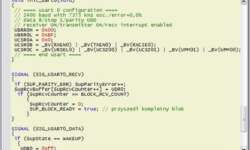
Author (Jurek Szczesiul) of AVRSIDE program decided that there is not enough functionality with standard Programmers Notepad. He started to write his own IDE, which expands functionality and usability. Project is still in development stage but looks very promising.

Main features are:

SDI interface model with as much space for code as possible;

creating single/multifile projects;

compile and [...]

Function calls and stacking of parameters in embedded systems

Monday, October 30th, 2006

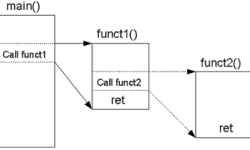
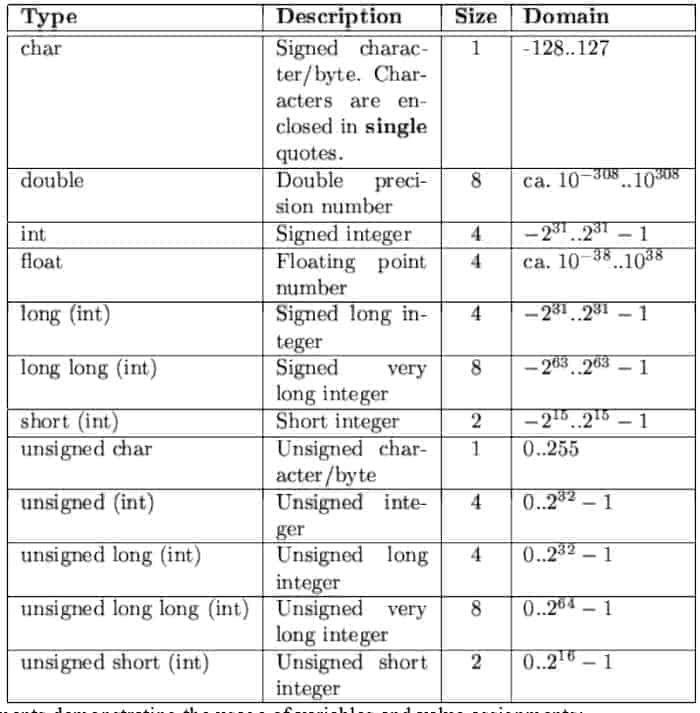
Usually when you write C programs for microcontrollers you use functions that can be called any time in main program or in another function. Compiler compiles these functions as subroutines. These functions can be called from main function or from other functions – this is called nesting (nested subroutines).

If you see the listings of compiled [...]

Build Piconomic Atmega128 development board by yourself

Thursday, October 26th, 2006

Earlier I have written about Piconomic learning course and its nice development board they provide. You can purchase the board if you are from a South Africa internationally for $49.99 + $9.37 airmail shipping with a tracking number, which takes 2-4 weeks, depending on custom delays. Of course there is good opportunity to build this [...]

Build your own RS232 adapter with LED indicators

Saturday, October 21st, 2006

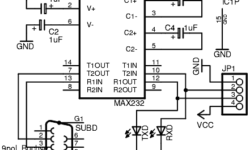
After I have made simple RS232 adapter I have decided to improve it a little bit and added status LEDs of TXD and RXD lines. This adapter works with my AVR development board and should work with any TTL level UART interface. Unit is powered from target board using power pins.
The circuit:

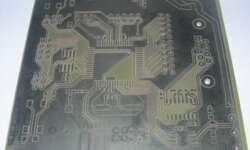
And PCB:

After putting board [...]

Generate sine wave modulated PWM with AVR microcontroller

Tuesday, October 17th, 2006

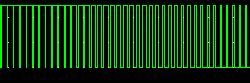
This example will show how ease can sinewave modulated PWM modulated using AVR microcontroller and few lines of code. For this example I used Atmega8 MCU. All project is set up in VMLAB simulator.
To achieve this I saved sinewave lookup table in a Program memory (don’t forget to include interrupt.h header file):

const uint8_t sinewave[] [...]

Two AVR-GCC examples of using AVR 8 bit Timers

Friday, October 13th, 2006

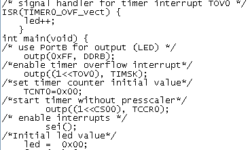
Timers are very important part of microcontrollers. They can can be used in many areas starting with simple timed routines to RTOS. Good thing is that timers run independently to main program flow. Set up the timer counter and let it do its job while your main program runs and does its job.
Lets take AVR [...]

Learning kit with multiple microcontroller support

Thursday, October 12th, 2006

For those who don’t like to mess up with PCB making and prototyping but want to learn to program multiple types of microcontrollers there is a solution. Team in India developed easy to use kit for learning microcontrollers.

Kit includes:

Ease and simple to use E- tutorial and printed version book;

Tutorial screen-shot

Programmer that supports all kit microcontrllers: [...]

Simple TTL to RS232 adapter

Wednesday, October 11th, 2006

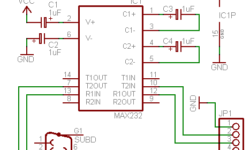
During spare time I made quick design of TTL to RS232 adapter, that works with my AVR development board. This adapter helps to connect TTL (Transistor-Transistor Logic) level signals to RS232 interface. TTL side is 9-pin female connector and RS232 sire is male connector.
Unit is powered from target board using power pins.
The RS232 TTL adapter [...]

Simplest dor-bell based on AVR microcontroller

Tuesday, October 10th, 2006

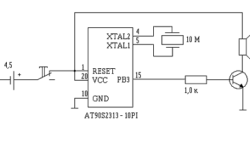
This circuit is so simple and generated sound may look ugly, but from other hand this is good starting point for newbies with AVR projects. This circuit is made of one IC AT90S2313 (may be substituted by Attiny2313). Circuit is low power and reliable as it consists of very few parts (if SMD chip used, [...]

Logical elements and their classification

Tuesday, October 10th, 2006

Logical elements are circuits that perform logical operations. Logical elements are used in digital circuits and are used to express Boolean algebra. The system of logical operations were defined by George Boole an English mathematician in 1848.
Firs logical element was used by Erenfest in 1910. It was calculator made of telephone relays…
Let’s go to now [...]